
The Problem With Community Cats
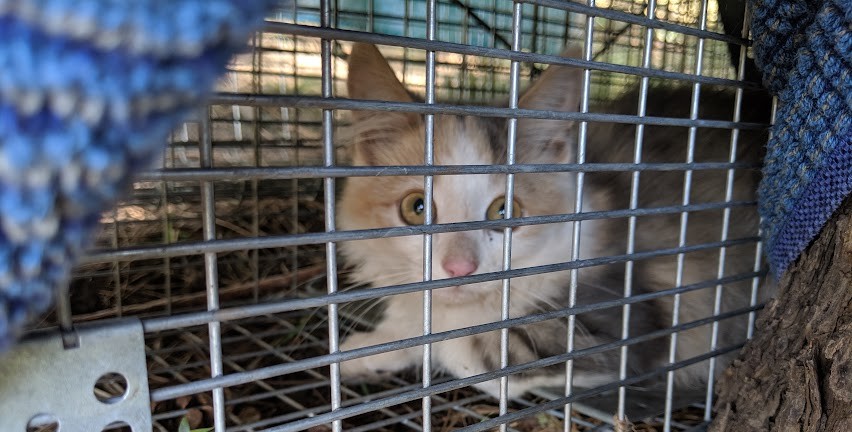
Historically in the US "community cat" has been used to refer to outdoor, free-roaming, unowned cats. These are cats who live outdoors and may have a caretaker who provides food/water and/or shelter for the cats as they live out their lives. Community cats are typically not adoptable and while they may display varying degrees of comfort around a caretaker they generally aren't handeable.
TNR (Trap Neuter Return) or TNRM (Trap Neuter Return Manage) -as it is now referred to by the ASPCA (American Society for the Prevention of Cruelty to Animals)- is the method of humanely trapping community cats, having them spayed or neutered and vaccinated and then returned to their managed location to live out their lives. TNRM involves a cat caretaker who provides food and monitors the colony's wellbeing, while continuing to identify and trap any new cats to be TNR'd back to the colony.
By definintion Community Cats are typically unadoptable and shelters are a very stressful location for these cats to be held. They are wild, shy, and frightened in traps, cages, and unfamiliar noisy indoor locations. While community cats might look like housecats (with the exception of their left ear tip missing) they survive outside by avoiding human contact and are much happier outside in their own territory.
Trap Neuter Return (TNR) stabilizes the population of community cats and over time humanely reduces the number of outdoor cats. It also largely eliminates problem behaviors like territorial spraying, mating, and loud tomcat fighting with the disease transmission and injuries that go along with it.
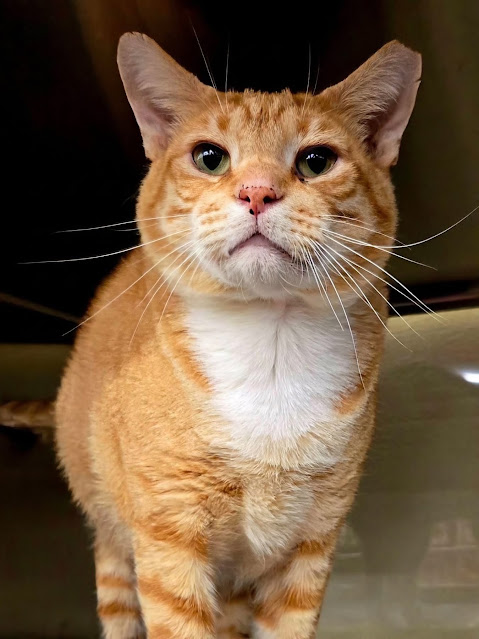 Ear tipping is the universal sign of a community cat- the tip of the left ear is surgically removed by a licensed veterinarian, typically under general anaesthesia during spay/neuter surgery, and helps prevent unnecessary re-trapping or anaesthesia. (Often feral cats have to be anaesthetised in order to be able to examine them for spay/neuter scars or tattoos.)
RTF (Return To Field) involves Community Cats who have been admitted to a shelter by animal control or members of the public being returned to their point of origin after being spayed/neutered, vaccinated, and ear tipped. They are returned to their point of origin without an identified caretaker in an attempt to provide a live outcome for cats. Per the ASPCA (American Society for the Prevention of Cruelty to Animals), "Return-to-field (RTF) should only be employed in narrow circumstances when it gives cats who need to enter animal shelters or rescues (hereafter referred to as shelters) the best chance for live outcomes." "The use of RTF programs should never supersede robust and aggressive adoption programs for surrendered cats (ASPCA's Position Statement on Responsibilities of Animal Shelters) or comprehensive pathway planning for community cats who are ill, injured, or too young to be returned."
Unfortunately some shelters and rescues have started using TNR and/or RTF to offload friendly adoptable stray cats and kittens to improve their live release rate and decrease the number of cats in their care. Putting friendly adoptable cats and kittens back out onto neighborhoods to fend for themselves with no identified owner, shelter (a big deal with our winters), or care and hoping for the best is far from the best interests of that cat. Abandoned, dumped or lost housecats who find themselves outside are not equipped to survive without human assistance/feeding and shelter. "Releasing" friendly adult strays outside (sometimes with only a vague description of where they were found) should be a last resort and only used when they have nowhere else to go and the alternative is euthanasia. "Releasing" friendly kittens is unexcusable and tantamount to a death sentence.
In 2024 the San Diego Humane Society was found guilty of violating animal abandonment and protection laws by dumping friendly, healthy cats on the streets by the thousands. During the trial it was revealed that over 18,000 friendly cats were "released", often with fresh surgical incisions and still feeling the effects of anaesthesia.
The Ark Cat Sanctuary supports the use of TNR to humanely treat and provide the best outcomes for feral cats. We also support the use of RTF with feral cats when it gives them the best chance for live outcomes. We DO NOT support the use of TNR or RTF for friendly adoptable cats and kittens unless other options have been exhausted and the only other option is euthanasia. It is irresponsible and abhorrent for shelters to use RTF as a standard procedure for friendly cats/kittens instead of putting in the work to find them safe and loving homes. We agree with the ASPCA that RTF "should never supersede robust and aggressive adoption programs for surrendered cats (ASPCA's Position Statement on Responsibilities of Animal Shelters) or comprehensive pathway planning for community cats who are ill, injured, or too young to be returned."